Welcome to the Presbyterian College School of Pharmacy blog!

Friday, September 5, 2014

Experience at PCSP


            Hi, my name is Krystal Shelton and I am a P2 student.  I began PCSP after obtaining 2 undergraduates degrees and was very nervous about “beginning” school again.  I can say that orientation week was a huge help for putting my mind at ease and guiding me in the direction for utilizing resources available to me.  During orientation week, I had the opportunity to interact with my fellow classmates and professors and began building trusting relationships. 

            Here at PCSP, I can truly say that the professors are HERE for YOU! They are willing to help you anyway that they can, even if it means staying after hours or meeting prior to normal business hours.  Yes, there is diligent work that must be done, but my father has always told me, “Honey, anything in life worth having, you MUST work for it!”  With that being said, REMEMBER why you have been chosen to embrace the amazing pharmacy profession, but also take time to enjoy life as well. Good luck and hope to see you soon!                

Wednesday, September 3, 2014

Camp Porcupine: Adventures in Working With Diabetic Children


Hi everyone,
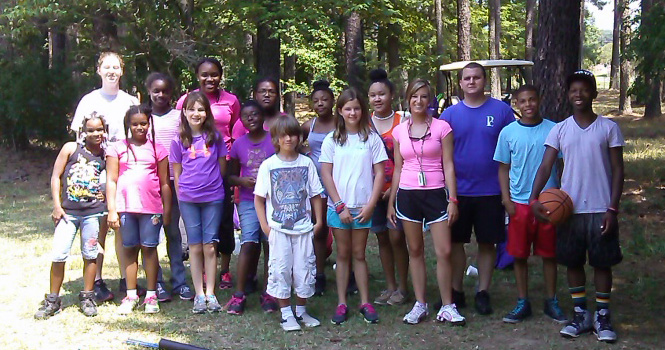
My name is Brittany and I am a rising third year pharmacy student at PCSP. This summer I was given the opportunity to volunteer at a children’s diabetic summer camp held at the YMCA in Greenwood, SC. It was scheduled for a week for about 7 hours a day; however I was only able to attend one day. Each day the campers completed different activities. The medical staff consisted of pharmacists, student pharmacists, nurses and also student nurses. I really enjoyed how were able to collaborate with each other to help the children manage their diabetes.
We were split up into two different teams. Each team consisted of a combination of the medical staff and a variety of the campers (age, sex, type of diabetes). There were charts for each child to have a record of what went on throughout the day when their blood glucose was checked.  The first activity we did consisted of games. One team painted with arts and crafts and the other played bingo. Bingo consisted of diabetic terminology to enhance their knowledge about the disease state. I must add they did extremely well at this game! During each physical activity, we had to monitor each child to make sure they didn't become hypoglycemic (low blood glucose). Signs we looked for included lightheaded-ness, dizziness and perspiration. If a child seemed to be hypoglycemic, we would take them to the side and check their blood glucose. It is was low, we would give them something to help increase it such as a glucose powder pack or a snack. We would also monitor their hydration. Before and after lunch, they had to check their blood glucose. Most of the children wanted to check their own. They were champs! Prior to eating, they had to count their carbs. Each child got a slip of paper with the different meal options. Once they added up the amount of carbs they wanted to eat, they verified it with one of the health care professionals. Based on their blood glucose reading and how many carbs they were going to eat, we would determine if they needed an injection before or after they ate if they were insulin dependent. The campers would calculate the dose of insulin that was needed and verify it with the medical staff prior to injection.  If they were unsure of the dose, we would help them calculate it. After lunch, the children engaged in other physical activities.

                This week long camp provided the children opportunities to engage in fun activities and also allowed them to enhance their knowledge about how to manage their condition. The campers were able to make new friends with others who also had diabetes. I gained a lot out of this experience. From learning about this disease state hands on to working with other health care professionals, I hope to be able to volunteer at this camp again next year. 

Monday, September 1, 2014

Culture of Success


When I began my quest to become a pharmacist in high school, I looked for a program that was not only going to accept me but make me the best pharmacist I can be. Shortly after I began my P1 year at Presbyterian College School of Pharmacy, I notice something different that I haven’t experience anywhere else. This difference was the culture of success. All of my classmates and faculty behaved in a professional manner that it began to rub off on me. Also, the mindset of service to the community began to become instilled into my personality. I caught myself doing more non-pharmacy community service than required, and feeling a sense of fulfillment once I volunteered. Outside of the classroom I was beginning to gain some of the attributes that cannot be read in a book or taught on a PowerPoint presentation that all current and future pharmacists needed. My classmates and faculty elected for me to take part in activities such as sitting on Q&A panel for PC undergraduates, student panel to interview Admissions Director, and many activities I couldn't see myself participating in until I came to PCSP.

                To the prospective students, know that there is a bright future waiting for you here at PCSP where you can grow academically and professionally. There are various guidelines which help foster a professional environment. The faculty and staff will prepare you for the real world interactions with the culture of success   
-Jimmy Pruitt

Community Service Counts at PCSP


Community service is a great way to get involved with the community. By getting involved you are reminded of your civil responsibility to the community you serve by uniting people from different backgrounds for a single cause. By volunteering I am providing a way for the community to save valuable resources and allowing me to build camaraderie and teamwork with those I serve with.
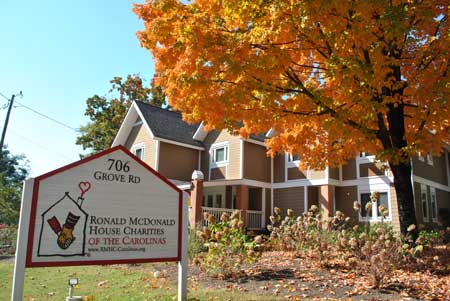
This year I branched out in my community service credit by volunteering at the Ronald McDonald House (RMH) in Greenville, South Carolina. This was one of the service opportunities that were made available to me through my membership with the Student Society of Health Systems Pharmacists (SSHP). Last year I earned my non-pharmacy related community service hours in my home town in Kentucky over thanksgiving break. This year I wanted to do something associated with the school to interact more with my fellow students and the community that I have become a part of while getting my professional degree.
At the RMH I was able to work with classmates and students from other years.  We worked in the private rooms that RMH provides for families to stay in while their child receives treatments. We removed all of the old closet dividers and replace them with a new simpler curtain. The employees at the RMH were so appreciative of what we were doing for them and we were able to interact with some of the families who were staying at the house. It is volunteering within your community that I feel is essential for a pharmacist to build a relationship with their patients, whom you may be servicing or serving with. Volunteering as a professional allows the community to interact with you outside of the workplace and to see you caring for the public.

I encourage you to volunteer in your communities, so that you may experience the joys of making a difference. While volunteering I have learned that I enjoy giving back to the community, others enjoy working with other responsible members of the community to make a difference and that society in general flourishes when able bodied members of that society work together for the betterment of the community as a whole. 

Monday, July 7, 2014


I can remember back to when I was in middle school having people tell me the importance of making good study habits early. Luckily, I took that advice and managed to do just fine in high school and undergrad. Now, as a first year pharmacy student, I see the importance of starting those habits early because they have served me well in my first year here at PCSP. If I could give undergrad students, (or even high school students for that matter) one piece of studying advice, it would be…drum roll please…start making a habit of studying a little every night! No longer will studying the night before, or even a couple nights before, be sufficient. Number one, you’re being presented a lot more material in a short amount of time. Number two, who really enjoys the occasional meltdown from being overwhelmed? Studying a little each day helps prevent those! (And helps you do well on the occasional pop quiz). Few meltdowns and nice pop quiz grades makes for a much happier world, my friend. Plus it will give you some fridge-worthy tests to send home to Mom. Pharmacy school isn’t a walk in the park, but by implementing good study habits and a good work ethic, it’s definitely doable! 

Written by Aurezu, P1 Student

Thursday, July 3, 2014

Commuting or Moving to Clinton


For those curious about living situations while at PCSP, several students commute, but also a lot of students live in Clinton.  I found a little apartment through the PCSP Housing Group that you could be added to once you get accepted.  Although it may seem like there is nowhere to live in Clinton, there are places around. It just requires a little time looking.  There are apartments available and lots of houses available for rent. You could even find a roommate if you wanted to live with one of your classmates.  I think there are so many benefits to living in town, like being able to study at school late knowing that I live right around the corner instead of having a 30 minute commute. Going to intramural sporting events knowing I won’t have to drive home late and also a lot of the P1’s live here so we get together and hang out when we have some free. To me I think it is just very convenient.  I like living in Clinton since I’m only 5 minutes from school, and I recently got a puppy so I can run home at lunch and let him out which is great!  There are even some community events that you can attend some weekends in town along with PC football games and other sporting events.  I have found living in Clinton very beneficial my first year here at PCSP.  Hope this helps those looking for housing in the area, good luck!

Written by Sara, P1 Student

Tuesday, July 1, 2014

Opportunities for Pharmacists in the Health-System


Hello, my name is Caleb, and I am a third year student pharmacist at the Presbyterian College School of Pharmacy in Clinton, South Carolina.  Among other activities at school, I am a student ambassador and serve as the President of the Student Society of Health-System Pharmacists (SSHP), which is an organization dedicated to advocating for and advancing the practice of pharmacy in the hospital and health-system setting.  

Each year, three pharmacy students in South Carolina are selected for an honors program known to as the Veterans Affairs Learning Opportunities Residency (VALOR) program. The VALOR program is designed to attract academically successful students of Doctor of Pharmacy programs to serve our country’s veterans by working within the Department of Veterans Affairs. This program gives outstanding students the opportunity to develop competencies in clinical pharmacy while at an approved VA health care facility, and the program aims to provide students with experiences that cannot be achieved through positions in other areas of pharmacy practice.  Annually, two students complete the program at the WJB Dorn VA Medical Center in Columbia, and one student is selected to complete the program at the Ralph H. Johnson VA Medical Center in Charleston.  I was given interviews for both programs and was ultimately selected for one of the seats at Dorn VA.  The other spot at Dorn was given to another PCSP student, John Ngo, who is currently a fourth year student pharmacist completing his advance practice rotations. 

I am gaining clinical experience in the inpatient pharmacy setting, but I also have longitudinal staffing duties in the outpatient pharmacy.  Although I have only been in my role for a few weeks, I have already learned so much from my experience.  One area in which I work in the inpatient setting is known as medication reconciliation.  Once a patient is admitted to the Dorn VAMC, a nurse gathers all of their medical history, including the medications which they are currently taking and includes this in the patient’s admission progress note.  One of the good things about the VA system is that most of the patients get all of their prescription medications delivered by mail from the centralized VA pharmacy in Charleston, so we already have record of those prescriptions.  However, we must be thorough and ensure that they do not get any other prescriptions filled at another pharmacy, take any over the counter medications, or take any type of dietary or herbal supplements.  After this information is gathered, the patient is seen by a medical provider.  After the provider reviews the patient’s information and performs an exam, he or she inputs his orders, some of which are labs and others are medications.  This is where I come in. 

 I perform a thorough medication reconciliation review for all patients coming through whichever service I am working that day (e.g., pulmonary care unit).  To start, I compare the medications that the patient took as an outpatient to the medications that the provider has the patient taking as an admitted inpatient, and I document any new medication additions, any medication discontinuations, as well as any dosage or delivery (e.g., oral to IV) changes to a patient’s medication regimen.  After this, I calculate the patient’s creatinine clearance.  For those of you who may not know, calculating creatinine clearance is our best way to clinically estimate a patient’s kidney function.  Since the kidneys are the organ in our body that eliminates wastes, and since the majority of drugs are partially if not wholly eliminated via the renal route, kidney function is very important when it comes to designing dosage regimens.  Persons with poor renal function must have adjustments made to their medication regimens since they will not be able eliminate most drugs from their bodies as effectively as someone with normal renal function. So, after calculating a patient’s kidney function, I review their current inpatient medications and document any recommended dosage adjustments. 

My next step in medication reconciliation is documenting drug-drug and drug-food interactions.  I place the patient’s medications into the drug interaction tool in Micromedex, which is one of our drug information resources, and make notes for the medical provider about all severe drug interactions.  In the event of a contraindication existing on the patient’s current medication regimen, I document my findings in my med rec note and immediately call the inpatient clinical pharmacy specialist.  From there, she gets in touch with the medical provider to get the situation corrected ASAP. 

My very last step in the medication reconciliation process is to monitor for adherence, at least regarding the prescriptions that the patient takes as an outpatient that are delivered from the VA central pharmacy.  For example, I have dates of their last fill, as well as the directions and the quantity of tablets that they were given. If it has been six months since the patient got their last 30 day supply, then they are not taking their medication like they should.  I make note of all of the medications with which it is suspected the patient has not been adherent and include it in my med rec note. 
Also, there are many residency trained clinical pharmacy specialists that work at the VA, and I will be spending time on their services throughout the next year.  Examples of some of the specialized pharmacy services include psychiatry, infectious disease, geriatrics, oncology, informatics, primary (ambulatory) care, and the list goes on!

I know this post was a bit long, but I hope that it helps you to realize all of the awesome opportunities that exist for pharmacists today, especially in the health-system setting! 


Written by Caleb, P3 Student